

The Steward’s Dictionary
AFFIRMATIVE ACTION: A plan calling for an assertive program to combat employment standards or procedures that tend to discriminate on the basis of gender, race, age, color, religion or national origin. Affirmative action not only deals with overtly discriminatory practices but also with those practices fair in form but discriminatory in effect.
AGENCY FEE: Dues or service charges paid to the union as the exclusive collective bargaining agent without a requirement that the fee payer join the union.
AGENCY SHOP: A collective bargaining agreement that provides that an employee in the bargaining unit who refuses to join the union must pay a service fee to the union equal to union dues.
ALTERNATIVE DISPUTE RESOLUTION: The use of such dispute resolution techniques as mediation, fact finding and arbitration as an alternative to the courts or federal regulatory agencies.
AMERICAN ARBITRATION ASSOCIATION: A private, nonprofit organization established to promote arbitration and mediation as methods of settling labor and other disputes. The AAA provides lists of qualified arbitrators and mediators to unions and employers upon request as well as rules of procedure for the conduct of arbitration.
AMERICAN FEDERATION OF LABOR AND CONGRESS OF INDUSTRIAL ORGANIZATIONS: A federation of unions created in 1955 by the merger of two more specialized union groups the American Federation of Labor and the Congress of Industrial Organizations. The AFLCIO is not in itself a bargaining agent. Its primary functions are educating, mobilizing and organizing workers and working families to bring economic justice to the workplace and social justice to our nation. This includes building unions, speaking out through political and legislative actions, providing a voice in the global economy and reaching out to community members.
ARBITRATION: A method of settling a labor manage- ment dispute by having an impartial third party hold a hearing, take testimony and render a decision. The decision usually is binding upon the union and management. The most common types of arbitration are grievante arbitration (usually the last step in the grievance procedure)and interest arbitration (sometimes used to settle negotiating impasses and set the terms of a collective bargaining agreement).
BARGAINING UNIT: A group of employees who bargain collectively with their employer. The unit may include all workers in a single plant or workplace or in a number of plants or workplaces. The unit also may include only the workers in a single craft in one work- place.
BECK DECISION: Unions have a legal obligation to represent all workers in a unit regardless of whether or not they are members of the union. See Duty of Fair Representation and Agency Fee. Under the U.S. Supreme Court’s decision in Communications Workers vs. Beck, a worker who is represented by the union, but is not a member, and who pays an agency fee, has the right to object to paying any portion of the agency fee that is not germane to collective bargaining. When a union receives such an objection from a nonmember fee payer, the union must reduce the objector’s fee payments to reflect the portion of union expenditures that are not germane to collective bargaining.
BONUSES: Some agreements include the payment of periodic bonuses or a lump sum payment.
BOYCOTT: A way of bringing collective pressure against an employer by discouraging the purchase of a product or service. Information regarding boycotts usually is communicated to union members through what is called an “unfair list.” Consumer boycotts are upheld by the courts.
BUMPING: This occurs when a person moves to a different job and in doing so causes another to have to move. The second person is said to have been “bumped” by the first.
CALLIN and CALLBACK PAY: A premium wage payment mode when a worker is called back to work or an assurance that they will work a given number of hours when called back to work.
CHECKOFF: A clause in the union contract requiring the employer to deduct union dues or agency fees from the paycheck of workers who have so authorized and remit the monies to the union.
CLOSED SHOP: A workplace which hires and employs union members only. The closed shop is illegal under the Taft Hartley Act.
COLLECTIVE BARGAINING: The method of determining wages, hours and other conditions of employment through direct negotiations between the union and employer. Normally, the result of collective bargaining is a written contract that covers all employees of the bargaining unit, union members and nonmembers alike.
COLLECTIVE BARGAINING AGREEMENT: A written agreement or contract that comes out of negotia- tions between an employer and a union. The CBA sets out the conditions of employment (wages, hours, fringe benefits, etc.) and ways to settle disputes and grievances. Collective bargaining agreements usually run for a definite period, often three years or less.
COMPANY UNION: A union organized, dominated and financed by the employer, giving workers no real protection while keeping them from organizing a real union. Outlawed as an unfair labor practice in the National Labor Relations Act.
CONTINUOUS VIOLATION: Most grievance procedures have time limits that require the grievance to be flied within a certain number of days after the event or after knowledge of the event. However, some events are continuous, making the time limits less clear. The usual rule is that the clock starts running when the union reasonably could have been expected to know of the event and have taken action.
DECERTIFICATION: The withdrawal of a union’s official designation as exclusive representative of a bargaining unit. Usually a result of employee dissatisfaction, it follows a decertification election.
DISCRIMINATION: Unequal treatment of a worker or a group of workers on a basis other than individual merit. Some forms of discrimination are illegal and others are immoral. For example, it is unfair to discriminate based on age, but not generally Illegal If the person is less than 40 years old. It is illegal to discriminate in conditions of employment for reasons based on sex, union membership, nationality, religion, race, age of the person is between 40 and 70 years of age, or pregnancy. The conditions of employment include types of jobs, benefits, promotion, layoffs, pay and other terms.
DUE PROCESS: Describes steps to be taken to ensure a worker has received all of the rights to which he or she is entitled prior to disciplinary action being taken by management. These rights include:
- The Right to Union Representation in any situation where being questioned by management may lead to disciplinary action.
- The Right to Have Specifics of Charges if accused of any violation leading to discipline.
- The Right to Answer or Respond to Charges before any disciplinary action is taken by management.
- The Right to Be Treated Fairly.
DUTY OF FAIR REPRESENTATION: The legal and moral obligation of the union to represent all workers in a nondiscriminatory or arbitrary way. This means that a grievance must be acted on based on its merits. It does not mean the union must take all cases through the grievance procedure, especially those that lack merit. It does not mean that the answer to the grievance has to be to the liking of the member. It does mean that the case must be treated like similar cases and that deviations must be well founded and reasoned.
Union action cannot be arbitrary, discriminatory or in bad faith. EEOC: Equal Employment Opportunity Commission, a federal agency charged with enforcing some federal civil rights laws, the Americans with Disabilities Act and other similar statutes.
ERGONOMICS: The study of matching the workplace and its machinery to the physical characteristics of workers to reduce strain on workers and thereby decrease lost time caused by work related illness and disability.
ESCALATOR CLAUSE: Clause in some union contracts that provides for increases or decreases in wages as the cost of living goes up or down. The “Cost of Living” Index of the U.S. Bureau of Labor Statistics 1s used to measure these changes.
FREE RIDER: A term used to describe an employee in a represented bargaining unit who benefits from union representation and contractual gains but refuses to pay dues.
FRINGE BENEFITS: All nonwage benefits in the union contracts such as paid holidays, paid vacations, insurance and pensions that are paid in whole or in part by the employer.
GOOD FAITH BARGAINING: The legal requirement that the certified bargaining agent and the employer meet at reasonable times and places and with an open mind toward reaching an agreement.
GOOD STANDING: A term used to describe a member who has met all obligations of union membership, including paid up dues.
GRIEVANCE MEDIATION: The inclusion by the parties of an additional step to the grievance procedure. which allows for the intervention of a grievance mediator. The aim of the grievance mediator is to get the parties to agree to a consensus settlement of the dispute short of arbitration.
INITIATION FEE: An amount of money new members pay upon joining the union in addition to regular dues. This fee often is waived during organizing campaigns, and if a member withdraws, they normally can request and receive an honorary withdrawal card so the fee need not be paid again.
INSUBORDINATION: The act of refusing or deliber- ately failing to carryout a supervisor’s direct order. To be charged with insubordination, the worker must (1) have been given a direct order, and (2) been made aware of the consequences of not obeying said order. When in doubt, it is recommended that workers carry out the work under protest (except if the direct order would lead to an unsafe action) and follow up the assignment with a grievance.
JURISDICTION: A claim by a union that it represents employees in a specific department or job classification or performing a specific type of work. Jurisdictional disputes usually are settled by an administrative agency, not in arbitration.
JOB EVALUATION: A systematic method of compar- ing jobs to determine appropriate differences in pay.
JUST CAUSE: The most common standard in a collec- tive bargaining agreement for determining whether the employer has sufficient reason to discipline or remove an individual from employment (also called reasonable or proper cause).
LOCKOUT: The denial of employment by the employer to the workers during a contract dispute for the purpose of forcing the union to settle on the employer’s terms.
MAINTENANCE OF MEMBERSHIP: A union security provision in a contract that says a worker who voluntarily joins the union must remain a member or pay an agency fee until the escape period.
MANDATORY BARGAINING: Those items included under “wages, hours and other terms and conditions of employment” over which the union and employer must bargain in good faith.
MANAGEMENT RIGHTS: Many collective bargain- ing agreements contain clauses that detail management’s right to act with respect to certain terms and conditions of employment. Other clauses in the agreement often modify this clause and management’s discretion.
MEDIATION: Efforts by a neutral third party to get union and management to agree where there is a dispute. The mediator (sometimes called the conciliator) acts to assist both sides in trying to find a basis on which the union and employer can resolve the dispute. Unlike arbitration, the mediator does not have the power to compel the parties to accept a resolution.
MERIT PAY: A system of adjusting worker pay based on the employer’s assessment of the worker’s performance. The failure to give a merit pay increase to an otherwise deserving individual may result in a grievance.
MODIFIED UNION SHOP: A union security provision in a contract that requires all new employees to join the union (or pay union dues) and requires workers already employed who are union members to remain in the union. This modified union shop is a combination of maintenance of membership for already employed workers and union shop for new workers.
NATIONAL LABOR RELATIONS BOARD: Created by the National Labor Relations Act (sometimes called the Wagner Act, or the NLRA) of 1935, the NLRB administers and enforces the Act. Its functions include: defining appropriate bargaining units, holding elections to determine whether a majority of workers want to be represented by a specific union or no union, certifying unions to represent employees and deciding whether employers or unions have committed unfair labor practices. At full strength, the board has five members appointed by the president.
NATIONAL MEDIATION BOARD: Created by the Railway Labor Act of 1934. It handles disputes concerning union representation, bargaining units and contract terms in the railroad and airline industries. The board is involved in dispute settlement, including mediation. If mediation fails, an emergency disputes procedure with fact finding and a cooling off period can be used.
NEGOTIATION: The process whereby the union and the employer discuss wages, hours and working conditions to reach agreement on those and on methods for administering the agreement.
NORAID PACT: Agreements between unions that each will not attempt to replace the other as bargaining repre- sentative. This principle has been built into the AFLCIO Constitution under “Article XX Internal Disputes Procedures.” This section provides rules, procedures and appeals when one union charges another with trying to replace it as bargaining representative. There also may be a no raid agreement between a national union and another labor organization that may or may not be affiliated with the AFLCIO.
OPEN SHOP: A workplace where the employer’s policy is not to recognize a union. The term sometimes refers to a workplace where bargaining unit members have no contractual obligation to join a union or pay dues or an agency fee.
OUTSOURCING: Sending work that could conceivably be done at one facility to another facility.
OVERTIME: Premium pay consisting of an amount over an employee’s regular daily or weekly pay. The Fair Labor Standards Act (FLSA)mode it mandatory in many employment sectors for employers to pay time and a half pay for all work performed beyond 40 hours a week. Some contracts call for double time pay in certain circumstances.
PAST PRACTICE: An accepted method by both parties of accomplishing a task or handling a situation that is not strictly defined by the collective bargaining agreement. The practice usually must be a reasonable, uniform response to a recurring situation over a substantial period of time which has been recognized by the parties implicitly or explicitly for it to have binding force arbitration proceedings.
PER CAPITA TAX: Required payments (usually per member per month) by a local union to its national or international union.
PROBATIONARY EMPLOYEES: A term for workers who have not finished their probationary employment period under the agreement. These workers generally have few or no rights under the agreement. However, the union steward still can assist these workers in finding their way around in the new workplace, speak on their behalf and assist them in obtaining help elsewhere.
SENIORITY: A worker’s length of service with an employer in a unit or in a job. Seniority often determines layoffs, promotions, recalls or transfers.
SEVERANCE PAY: Payment by the employer to a worker who is laid off permanently through no fault of his or her own (also called termination or separation pay).
SICK LEAVE BENEFITS: Benefits paid to a worker while out sick. Pay may be provided under the union contract, or, in some states, by state law.
SLOWDOWN: The act of deliberately reducing the pace of work. This may be grounds for discipline under most agreements.
SPEEDUP and STRETCHOUT: An increase in the amount of work an employee is expected to do without an increase in pay. The speed of the product on line may be increased (speedup) or a worker may be required to tend to a greater number of tasks (stretch out).
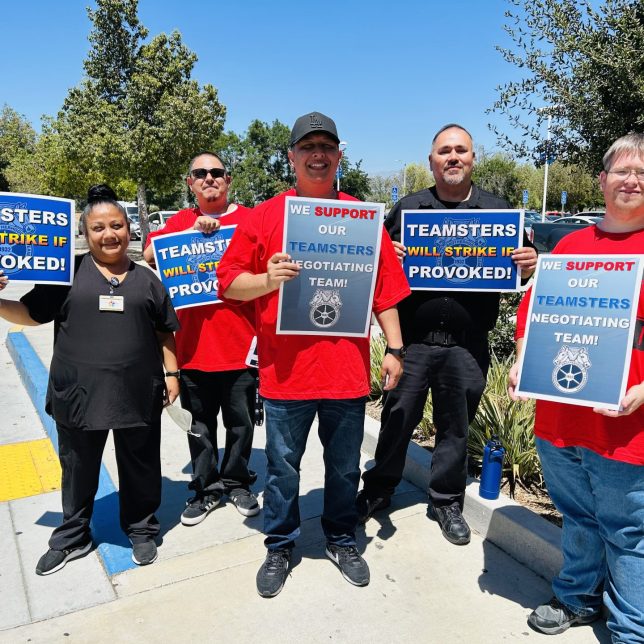
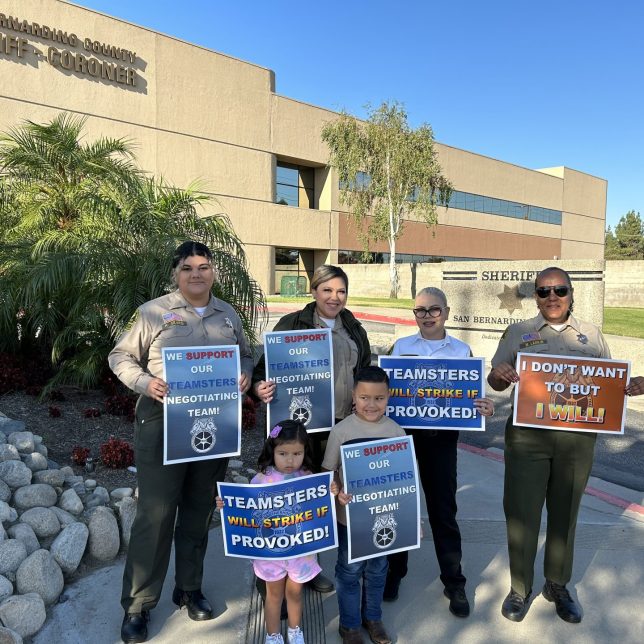
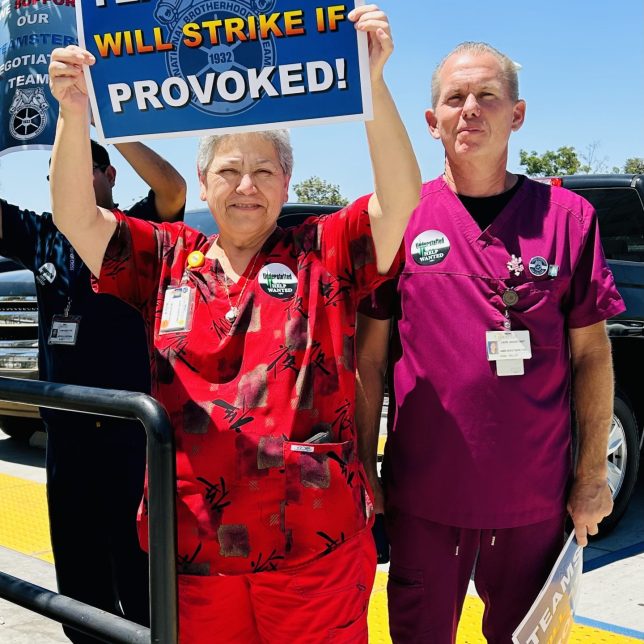
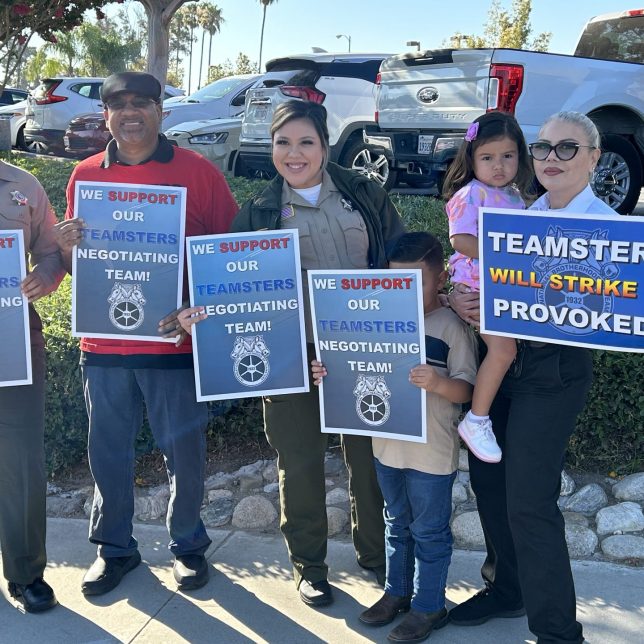
STRIKE: Stopping work for the purpose of gaming some demand, generally concessions, from the employer. Among the types of strikes: Wildcat strike, triggered by an incident on the job and usually short in duration, without union authorization and in violation of the contract; Sympathy strike, a strike taken to support other strikers and to increase pressure on the employer to settle in negotiations; Unfair labor practices strike, a strike to force an employer to cease engaging in illegal activity.
STRIKEBREAKER: A person who continues to work, or who accepts employment while the union is on strike (also called a scab). By filling jobs of striking workers, this person may help weaken or break the strike.
SUBCONTRACTING: The practice of employers having work performed by an outside contractor and not by regular employees in the unit (also called contracting out).
SUPERSENIORITY: An agreement between the union and management to retain union officers on the job. beyond the time their seniority would entitle them, when the workforce is being reduced. The legal ability to do this is restricted to union officers necessary to the enforcement of the agreement.
TAFTHARTLEY: The Labor Management Relations Act of 1947, enacted over President Truman’s veto, undercut much that workers and unions gained from the National Labor Relations Act of 1935. Among other things, Taft Hartley defined union unfair labor practices and limited union security provisions.
UNFAIR LABOR PRACTICE: Conduct on the part of either union or management that violates provisions of federal or state labor laws. For example, management may commit a ULP by refusing to bargain in good faith.
UNION LABEL or UNION CARD: A stamp or tag on a product or card in as tore or shop to indicate that the work is done by union labor.
UNION SECURITY: A clause in the contract providing for the union shop, modified union shop, maintenance of membership clause or agency shop. The check off also can be regarded as a form of union security.
UNION SHOP: A workplace in which every worker covered by the contract must become a union member or pay on agency fee. New workers need not be union members to be hired, but must pay dues after a certain number of days, usually 30 days for industrial workers and seven days for construction workers.
ZIPPER CLAUSE: A clause in the agreement, usually part of the management rights clause. making the contract the exclusive statement of the rights and obligations of the parties. This clause can limit the use of past practices in arbitration.